Each year, the Religious Studies department chooses 2-3 Undergraduate Department Fellows, who act as peer advisors to fellow undergrads (both enrolled in and considering the major/minor) and work in conjunction with the Director of Undergraduate Programs on organizing events and communicating with the Religious Studies undergraduate cohort.
Please reach out to any of them with any questions and to learn about the lived experience of the Religious Studies major/minor from an expert perspective!
The 2026-27 Religious Studies Undergraduate Department Fellows are:
 Matthew Cherici (tbd9ys@virginia.edu) is a third-year double major in Religious Studies and Psychology. His Religious Studies concentration is Christianity. He is interested in the intersections of religion and psychology in light of religious and secular frameworks that shape understandings of suffering, trauma, and recovery from substance abuse. Through his work with UVA’s Collegiate Recovery Program (CRP), Matthew has become particularly interested in how different religious and secular pathways contribute to sustained recovery. Some of the most notable courses he has taken include Elements of Christian Thought (RELC 2360), taught by Paul Jones, and Responses to the Holocaust (RELJ 3052), taught by Jennifer Geddes, both of which have contributed to his exploration of theology and suffering. Matthew is eager to meet prospective and existing Religious Studies majors/minors!
 Brayson Holmes (djr2sq@virginia.edu) is a third-year double major in Religious Studies and Political Philosophy, Policy, and Law. His religious studies concentration is Religion, Ethics, and Philosophy. Brayson is interested in how religious diversity affects the development of national identities and how our understanding of morality is shaped by faith. His favorite courses examine different ways of interpreting religious norms: like Professor Charles Mathewes’ "Religious Ethics & Moral Problems" (RELG 2300) and Professor Halverson-Taylor’s "The Book of Job and Its Interpretation" (RELC 3292). When he’s not in Nau Hall, you can find Brayson competing on the mock trial team or volunteering as a teacher in Charlottesville high schools. He is excited to meet current and prospective Religious Studies students!
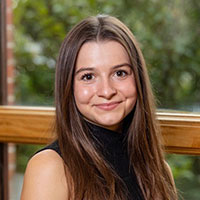 Isabel Kent McDaniel (vsa3se@virginia.edu) is a fourth-year double major in Religious Studies and English. She is in the Religion, Literature, and the Arts concentration and loves exploring how literature can illuminate religious ideas and experiences. Isabel is especially interested in how novels, poetry, and other creative works wrestle with questions of belief, meaning, and identity, and how stories can shape the way people understand faith. Two of her favorite courses so far have been Faith and Doubt in the Modern Age (RELG 2350) and Kingdom of God in America (RELC 2580), both of which deepened her interest in the intersections between storytelling and religion. Outside of class, she serves as an Educator on the UJC and volunteers with Literacy Volunteers. She’s excited to meet and connect with Religious Studies students!
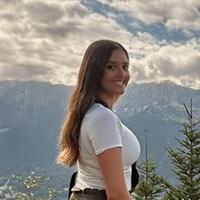 Aahna Patel (kcy2tf@virginia.edu) is a fourth-year double major in Religious Studies and an Echols Interdisciplinary Studies major, combining South Asian Studies, Anthropology, and Health/Well-being. Her research explores how religious traditions provide internal frameworks that shape resilience, emotional well-being, and meaning-making in both crisis and everyday life. Currently, she is investigating how Ugandan Asians expelled in 1972 utilized these frameworks to navigate displacement. Among her favorite courses are Travel Writing in India with John Nemec, where she delved into her grandfather’s imprisonment under Idi Amin and forced exile, reflecting on how belief is sustained through internal narrative and lived memory. Spirituality in America with Matthew Hedstrom also captivated her, as she examined how traditions adapt to modern contexts. Aahna is eager to meet prospective and existing majors/minors.